
41+
Years Of Experience
PROTECT & RESTORE YOUR STAMPED CONCRETE
STAMPED CONCRETE SEALING & RESEALING IN ALBANY, SCHENECTADY & CLIFTON PARK, NY
Protect the color and appearance of your stamped concrete with professional sealing and resealing from American Design & Contracting. We provide stamped concrete sealing and restoration throughout Albany, Schenectady, Clifton Park and the surrounding Capital Region.
Over time, sun, rain, snow, freeze-thaw cycles and everyday use can cause stamped concrete to fade, stain and lose its original appearance. Proper cleaning and sealing helps protect the surface from moisture, UV exposure and staining while bringing back the rich color and finished appearance of your concrete.
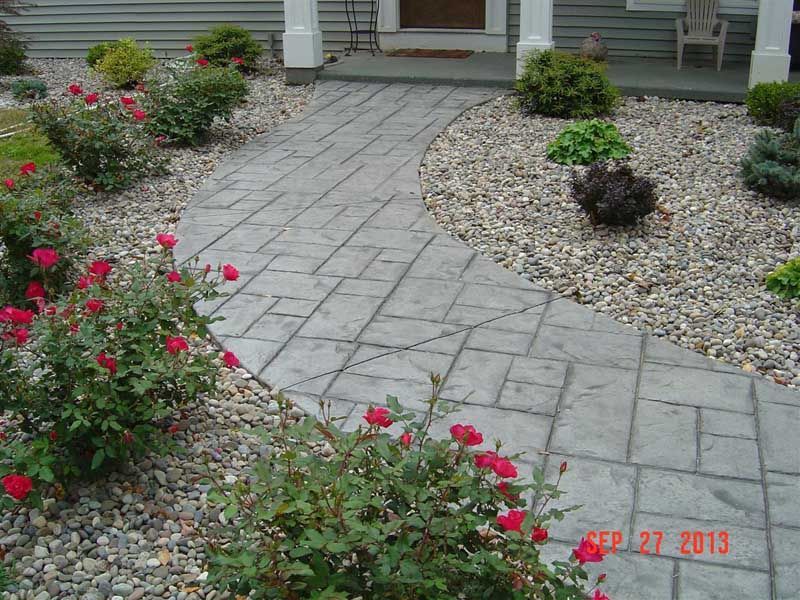
We seal and reseal stamped concrete patios, pool decks, walkways, steps and driveways. Before applying new sealer, we evaluate the existing surface, thoroughly clean the concrete and determine whether old or failing sealer needs to be removed.
Whether your stamped concrete is newly installed or an existing surface that needs to be refreshed, our experienced team can recommend the proper sealing or restoration process.
Call or text American Design & Contracting today for a stamped concrete sealing or resealing estimate in Albany, Schenectady, Clifton Park and surrounding Capital Region communities.
What Happens During the Application Process
Surface preparation determines whether the sealer will bond correctly or fail within months. Pressure washing removes dirt, mildew, and algae, while specialized degreasers eliminate oil stains and chemical residue that would prevent adhesion. If the existing sealer is blushing, which appears as white cloudy patches caused by moisture trapped under the coating, or if it's flaking and peeling, the old sealer must be chemically stripped before the new application begins.
After sealing, your stamped concrete looks noticeably darker and richer because the coating intensifies the contrast between the base color and the antique release. Water beads on the surface instead of soaking in, oil from vehicles wipes away without leaving permanent stains, and the texture remains visible but the surface gains a protective wet-look sheen. The final coat includes a clear non-slip additive, a fine polymer grit mixed into the sealer, which provides traction on surfaces that would otherwise become dangerously slippery when wet.
The concrete requires a minimum of 24 to 48 hours of dry conditions before application because sealer cannot bond to damp surfaces. Moisture trapped beneath the coating causes blushing or complete adhesion failure. Two thin coats applied with either a high-quality 3/8 inch nap roller or a professional-grade sprayer produce better results than one thick coat, which puddles and traps air bubbles that compromise the finish.
What Property Owners Usually Ask
Stamped concrete sealing raises practical questions about timing, product selection, and maintenance intervals that affect both appearance and longevity.
What type of sealer produces the best color enhancement?
Solvent-based acrylic sealers create the most dramatic wet-look finish and make colors appear vivid and saturated, while water-based acrylics provide a more subtle satin or matte appearance with lower odor levels during application, though they enhance color less intensely than solvent-based options.
How often does stamped concrete need resealing?
Most stamped concrete requires resealing every two to three years depending on exposure to traffic, weather, and UV intensity, with high-traffic areas or surfaces in full sun potentially needing attention on the shorter end of that range.
Why does old sealer sometimes turn white and cloudy?
Blushing occurs when moisture becomes trapped beneath the sealer layer, usually because the concrete was still damp during application or because the coating has degraded enough to allow water penetration, and it requires stripping the failed sealer and reapplying after the surface has dried completely.
Can sealer be applied over existing coatings?
New sealer bonds to old sealer only if the existing coating is still intact and adhering properly, but if the old layer is peeling, flaking, or blushing, chemical stripping is necessary to remove it completely before reapplication.
What makes sealed concrete slippery and how is that prevented?
Sealed surfaces become slick when wet because the coating creates a smooth, non-porous layer, which is why a clear anti-skid additive consisting of fine polymer grit is mixed into the final coat to restore traction without diminishing the appearance of the finish.
American Design and Contracting uses solvent-based and water-based acrylic sealers selected based on the desired finish and exposure conditions of your specific surface. Proper sealing acts as sunblock for your concrete, preventing color degradation and creating a barrier that stops oil, grease, and de-icing salts from penetrating and causing permanent damage. Request a detailed assessment of your current surface condition and a recommendation for the sealer type and application schedule that matches your property's needs.