
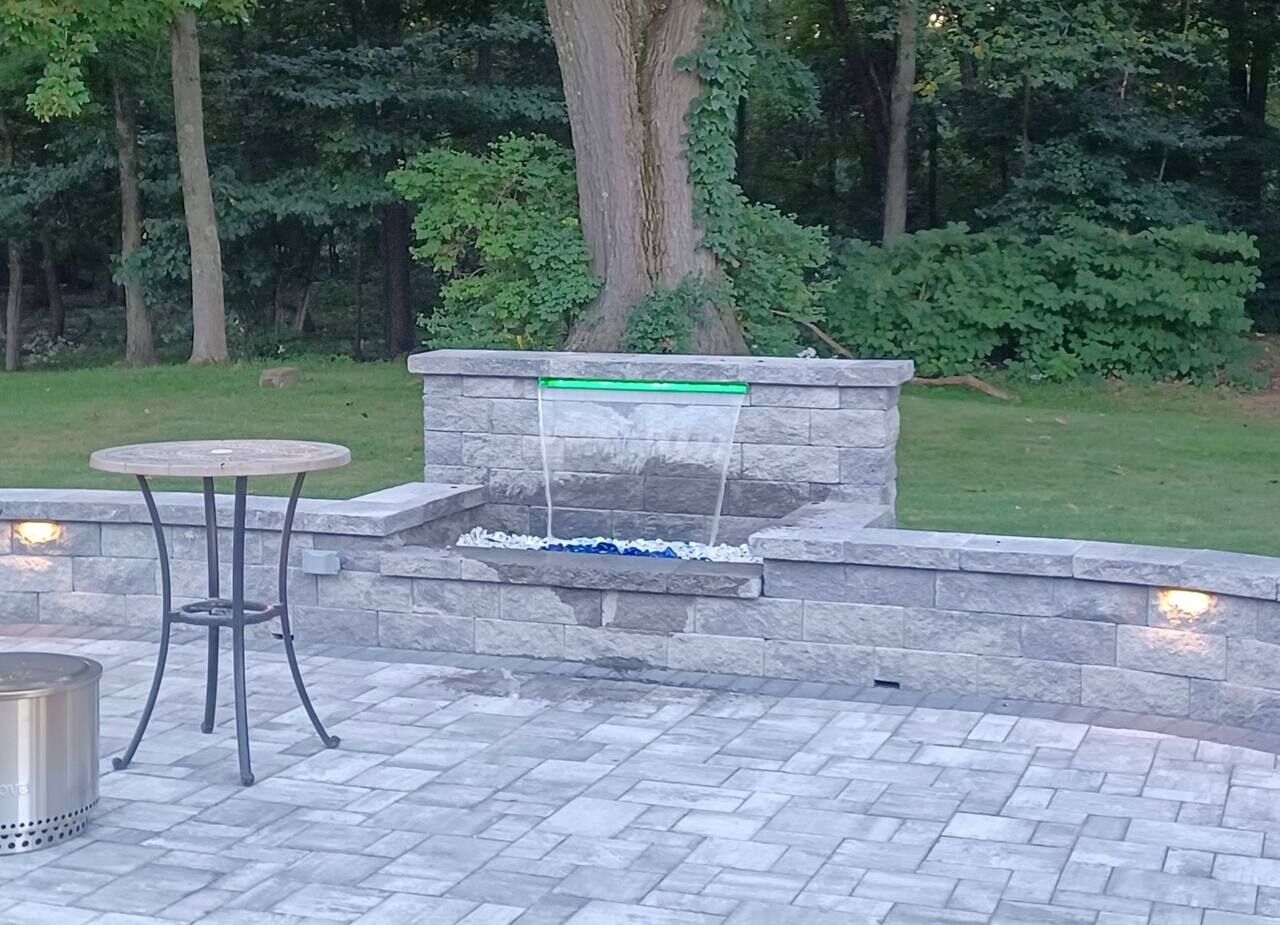
Services
Brick Pavers
ICPI certified brick paver installation — patios, walkways and pool decks in Albany, Schenectady and Clifton Park, NY. Built on a proper base. Free estimates.
Brick pavers are a huge part of what we do. We're ICPI certified — the Interlocking Concrete Pavement Institute's installer certification — and we've been laying paver patios, walkways, and pool decks across Albany, Schenectady, and Clifton Park since 1987.
A paver surface done right is one of the most durable hardscapes you can buy. Pavers are made of concrete and are about 2–3 times stronger than a poured slab, and because each unit is independent, the surface flexes with Capital Region freeze-thaw. They're set on 4–6" of stone and a concrete sand leveling bed. The difference between a paver job that lasts and one that doesn't is entirely in the installation.
Paver patios
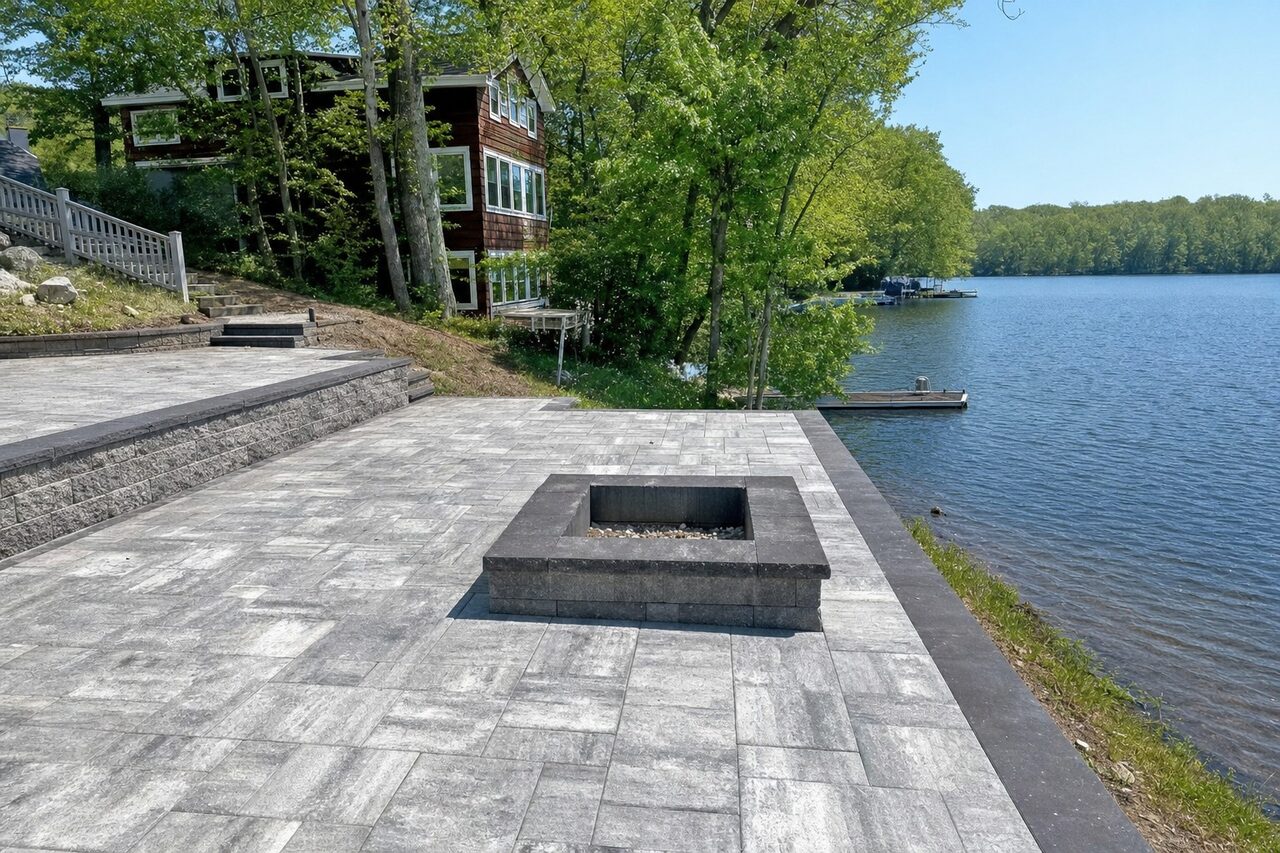
The workhorse of the category. Pavers give you pattern, borders, and color blends that poured concrete can't match unit-for-unit, and the paver system stays serviceable — individual pavers can be lifted and relaid without tearing out the whole surface. We design the layout around how you'll actually use the space, then build it on a compacted stone base so it stays flat. Comparing surface options? Start at Patios.
Walkways & front entrances
A paver walkway is usually the first thing a visitor touches on your property. Borders, soldier courses, and a color pulled from the house make the entrance read as designed rather than poured. We match materials and colors to the style of your home, not a catalog default.
Pool decks
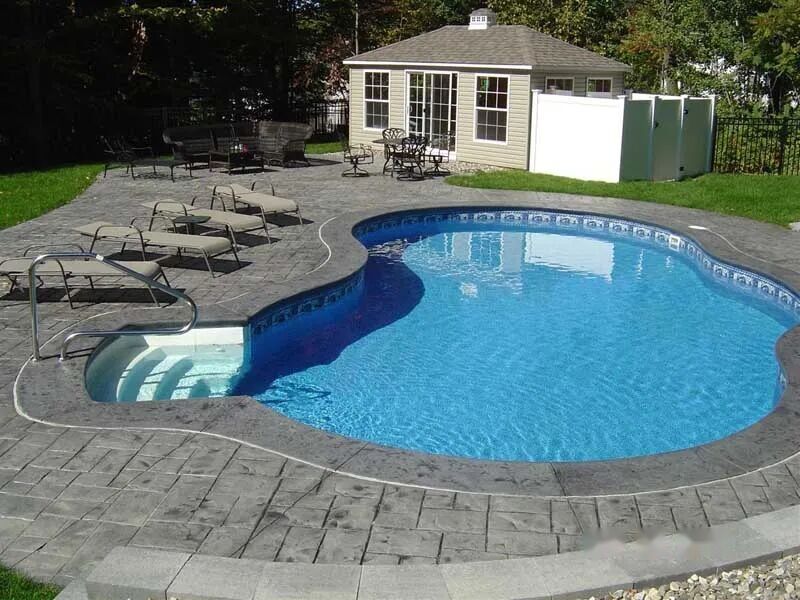
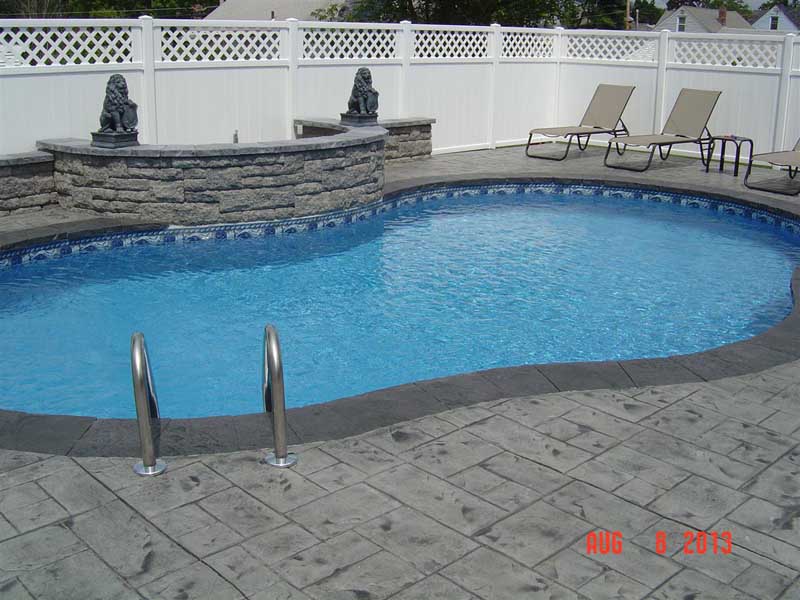
Pavers around a pool drain fast, stay slip-resistant, and can be lifted and relaid if the deck ever needs to be opened. They're one of the three surfaces we rebuild pool decks with — the full remodel process is on Pool Areas & Pool Decks.
Steps & seat walls
Paver steps and matching seat walls tie the whole hardscape together — same manufacturer line, same color blend, one project instead of three. Wall systems get the same base and drainage standards as our retaining walls.
Colors & styles
Brick pavers bring their own palette — color blends, sizes, and laying patterns from the manufacturers' lines, plus borders and soldier courses in contrasting tones. The paver displays at the display center show full laid sections, not single sample bricks. Matching pavers to a stamped patio? Stamped colors are covered on Stamped & Decorative Concrete.
ICPI certification means the base gets built to the standard: excavation, four to six inches of compacted stone, a screeded sand setting bed, edge restraint, and compaction — before the first paver goes down. It's also why we can put a one-year warranty on movement and settlement, to ICPI standards, on our paver work. Many manufacturers back the pavers themselves for life.
How the job runs
- Free estimate. We look at the space, the grade, and the access, and talk through what you want.
- Design and materials. Paver line, color blend, pattern, borders. Walk the real displays at our display center — it's open 24/7 (nobody's on site unless you call ahead to meet someone).
- Install. Excavation, compacted stone base, sand bed, pavers, edge restraint, joint sand, compaction. We own the equipment, so nothing waits on a rental.
- Walk-through. We clean up, go over care, and leave you a surface built to outlast the house paint.
More Brick Pavers photos
Photo numbers are permanent — mention a number when you call and we'll be looking at the same picture.

Frequently asked questions
Pavers or stamped concrete?
Honest answer: personal preference and budget. Pavers cost more, are stronger, and need less maintenance. Stamped concrete costs less and looks terrific but needs resealing every 2–3 years. We install both, so we have no reason to steer you — come stand on each at the display center.
Do pavers shift in winter?
Not when the base is right. Four to six inches of compacted stone drains water away before it can freeze and heave. Almost every failed paver job we're called to look at failed under the surface, not on it.
What about weeds in the joints?
Jointing sand and a proper edge restraint keep the joints tight, which is most of the battle. Weeds in paver joints grow from seeds landing on top, not up from below — routine sweeping and occasional joint-sand top-up handles it.
Is there a warranty?
Yes — one year on movement and settlement, built to ICPI standards. Many paver manufacturers additionally warranty the product itself for life. That's a stronger position than poured concrete, which carries no warranty in this climate — and we tell you that upfront too.